

Learning to drive is a major step, and choosing the right instructor can make the process much easier. One of the first things many learners search for is driving schools near me, especially when they want lessons that are convenient, professional, and focused on passing the practical test safely.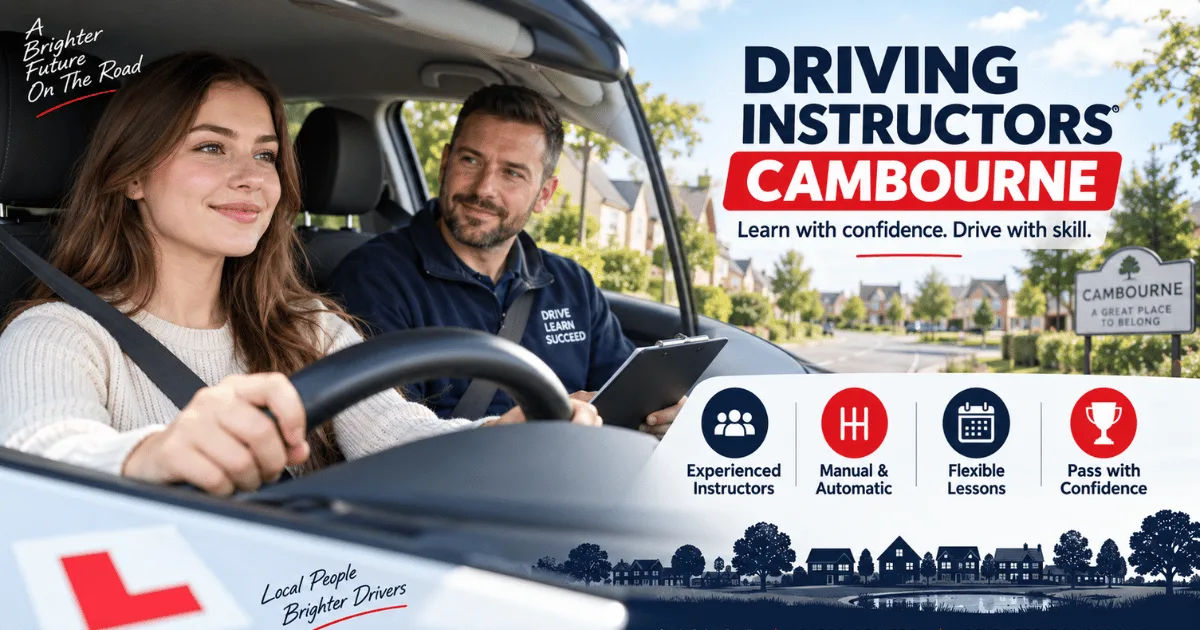
However, location should not be the only factor. An instructor’s qualifications, teaching approach, experience, availability, and understanding of current driving standards all matter. In Great Britain, anyone charging for car driving instruction must either be a qualified and registered Approved Driving Instructor (ADI) or hold a trainee driving instructor licence.
So, should driving schools near me use DVSA-approved instructors? In most cases, yes. Using properly qualified ADIs gives learners an important level of reassurance because these instructors have gone through a formal qualification process and are regulated through the DVSA.
What Is a DVSA-Approved Driving Instructor?
A DVSA-approved driving instructor is commonly known as an ADI, which stands for Approved Driving Instructor.
The Driver and Vehicle Standards Agency regulates the ADI register in Great Britain. To become an ADI, an instructor has to complete a qualification process involving theory, driving ability, and instructional ability tests.
This matters because teaching someone to drive is about much more than simply knowing how to operate a car.
A good instructor needs to understand how learners develop their skills, identify mistakes, explain difficult situations clearly, and help students become safer and more independent drivers.
Once an instructor has qualified and registered, they can charge learners for driving instruction. Their registration is normally valid for four years, after which they need to renew it and continue meeting the relevant requirements.
Why Should Driving Schools Use DVSA-Approved Instructors?
For learners, one of the biggest advantages is confidence.
When someone books lessons, they are putting themselves in a vehicle with an instructor and trusting that person to teach them correctly. A recognised qualification provides an important professional benchmark.
A DVSA-approved instructor has demonstrated the required level of driving and instructional ability through the ADI qualification process. The government explains that the qualifying tests are designed to ensure instructors meet the national standard for driver and rider training.
That does not mean every ADI will be perfect for every learner.
Teaching style still matters. One instructor might be patient and calm, while another may use a more structured and direct approach. Learners should therefore look at both qualifications and personal suitability.
Nevertheless, choosing an appropriately qualified instructor is a sensible starting point.
Is It Legal to Pay an Unqualified Instructor?
This is an important distinction.
In Great Britain, someone who charges money or something of monetary value for car driving instruction must either be registered as an ADI or have a valid trainee driving instructor licence.
That means a learner should not simply assume that someone offering cheap lessons is properly authorised.
A person might have many years of driving experience without being qualified to teach professionally.
Driving well and teaching well are also two different skills.
Someone can be an excellent driver but struggle to explain clutch control, observation, junction planning, meeting traffic, or independent driving to a nervous beginner.
For that reason, learners should pay attention to the instructor's professional status rather than choosing purely on price.
What Is the Difference Between an ADI and a Trainee Instructor?
Not every legitimate instructor you encounter will necessarily be a fully qualified ADI.
A trainee driving instructor can legally provide paid instruction under the appropriate trainee licence arrangements. GOV.UK explains that after passing the relevant part of the ADI process, an instructor may apply for a six-month trainee licence to gain teaching experience.
This means a trainee instructor is not automatically an unsafe choice.
However, there is an important difference in experience and qualification status.
A fully qualified ADI has completed the required qualifying process and registered as an instructor. A trainee is still working towards full qualification and gaining practical teaching experience.
If you are comparing driving schools near me, ask whether the person teaching you is a fully qualified ADI or a trainee instructor.
There is nothing wrong with asking.
A professional instructor should be comfortable explaining their status.
How Can Learners Check an Instructor?
One useful advantage for learners is that DVSA provides an official service for finding approved driving instructors.
The GOV.UK service allows people to search for instructors and, where available, check their grade. Not every ADI chooses to appear on the service, so absence from the list does not automatically mean someone is unqualified. DVSA advises learners to contact the agency if they need to check an instructor who is not listed.
There is also a simple visual check.
Qualified instructors display a green badge in their windscreen, while trainee instructors display a pink badge. GOV.UK advises learners to check the instructor's badge before taking lessons.
This is particularly useful when comparing several driving schools near me because it gives you something objective to check rather than relying entirely on advertising.
Does DVSA Approval Guarantee a Good Instructor?
No.
This is where learners sometimes misunderstand the meaning of approval.
DVSA approval confirms that the instructor has met the required professional and regulatory standards. It does not guarantee that their personality, teaching style, availability, or communication skills will suit every learner.
For example, one learner may want detailed explanations before attempting a manoeuvre.
Another may prefer to practise first and receive feedback afterwards.
A nervous learner might need an especially calm instructor who avoids overwhelming them with too much information at once.
A confident learner who wants to prepare quickly for a test may prefer a more structured approach.
Therefore, DVSA approval should be considered an important minimum standard rather than the only factor in your decision.
What Should You Look For Beyond DVSA Approval?
When researching driving schools near me, consider the complete learning experience.
Teaching Style
Ask how the instructor normally structures lessons.
Do they assess your current ability first?
Do they explain why something needs to be corrected?
Do they gradually reduce assistance as you improve?
These questions can tell you more about the actual teaching experience.
Communication
Good communication is essential.
Driving involves many decisions happening quickly. If an instructor gives unclear or unnecessarily complicated instructions, a beginner can become confused.
A good instructor should be able to explain technical driving concepts in straightforward language.
Patience
Learning does not happen at exactly the same speed for everyone.
Some students master clutch control quickly but struggle with roundabouts. Others may understand road positioning but need more time to become confident with manoeuvres.
An instructor should recognise these differences instead of treating every learner exactly the same.
Local Knowledge
Local road knowledge can also be valuable.
An experienced instructor may understand common traffic patterns, difficult junctions, speed-limit changes, busy roundabouts, and roads frequently used around the local test area.
This can make lessons more practical.
However, learners should not be trained only to memorise a test route. The goal should be to develop skills that work on unfamiliar roads too.
Why Professional Standards Matter
Driving instructors have a responsibility that goes beyond helping learners pass a test.
The ADI register guide states that instructors are responsible for their own safety, the safety of their pupils, and the safety of other road users. It also expects instructors to maintain a high standard of driving and instructional ability and take a professional approach to customers.
That is an important point.
A learner is not simply purchasing an hour inside a car.
They are receiving professional instruction that can influence their future behaviour on the road.
An instructor who teaches learners to anticipate hazards, maintain appropriate observation, understand road positioning, and make sensible decisions can provide value long after the practical test has been completed.
Should Cheap Lessons Be a Warning Sign?
Not necessarily.
Lesson prices can vary for many legitimate reasons.
Instructors have different operating costs, vehicles, experience levels, locations, and business models. A cheaper lesson is not automatically poor quality, just as an expensive lesson is not automatically excellent.
However, price should never be the only deciding factor.
If one school is slightly more expensive but provides a properly qualified instructor, reliable lesson scheduling, a suitable vehicle, and a teaching approach that works well for you, the extra cost may be worthwhile.
The cheapest option can become expensive if poor teaching results in unnecessary additional lessons.
Questions to Ask Before Booking
Before choosing among driving schools near me, ask a few straightforward questions.
Is the instructor a fully qualified ADI?
If not, are they a licensed trainee instructor?
What type of car will I learn in?
Can I have the same instructor for most lessons?
How long are the lessons?
What happens if I need to cancel?
Does the instructor provide progress feedback?
How are weak areas identified?
Will lessons include different road types and traffic conditions?
Does the instructor provide mock tests when I am ready?
These questions do not need to sound like an interview.
They simply help you understand what you are paying for.
What About Reviews and Recommendations?
Reviews can be useful, but they should be treated as one part of the decision.
Look for patterns rather than focusing on one extremely positive or negative review.
If several learners mention that an instructor is patient, punctual, clear, and good at explaining difficult situations, that information is useful.
Likewise, repeated complaints about cancelled lessons, poor communication, or aggressive teaching should make you investigate further.
Personal recommendations can also be valuable.
If a friend or family member recently learned to drive, ask what they liked and disliked about their instructor.
Just remember that a good instructor for one person may not necessarily be the right instructor for another.
What Should Nervous Learners Consider?
Nervous learners should be particularly careful when choosing an instructor.
The first few lessons can feel intimidating. A learner may worry about stalling, making mistakes at junctions, confusing the pedals, or holding up other traffic.
A patient instructor can make a major difference.
The right instructor should correct mistakes without making the learner afraid to try again.
When comparing driving schools near me, nervous learners should consider asking specifically whether the instructor has experience teaching people who lack confidence.
That question can help identify instructors who are comfortable adapting their approach.
Does the Type of Car Matter?
Yes, especially if you already know whether you want to learn in a manual or automatic vehicle.
Manual lessons involve clutch control, gear changes, coordination, and additional decision-making.
Automatic vehicles remove clutch and gear-changing tasks, which some learners find easier.
The important thing is to choose the licence pathway that suits your long-term needs.
The instructor should also be comfortable teaching the vehicle type you intend to use for your test.
How Important Is Ongoing Professional Development?
Professional development is another useful consideration.
Driving rules, technology, teaching methods, and road-safety expectations can change over time.
The DVSA maintains systems and guidance for instructors, and its official information includes continuing professional development opportunities for instructors.
An instructor who takes professional development seriously is more likely to keep their knowledge current.
This does not mean learners need to investigate every training course an instructor has completed.
It simply reinforces why professional standards matter.
How Should You Compare Driving Schools?
A simple comparison can make the decision easier.
Start with qualification status.
Then look at lesson prices, availability, vehicle type, location, reviews, teaching style, and cancellation policies.
After that, think about your own needs.
Do you need an instructor who is especially patient?
Do you need evening or weekend lessons?
Are you preparing for a test soon?
Are you starting from zero?
Do you need refresher training?
The best school is usually the one that provides a sensible combination of professional standards, suitable teaching, convenience, and reasonable pricing.
Conclusion
So, should driving schools near me use DVSA instructors?
For learners in Great Britain, properly qualified and registered instructors are extremely important. Anyone charging for car driving instruction must be a qualified ADI or appropriately licensed trainee instructor, and qualified instructors have completed a formal process designed to establish their driving and instructional ability.
However, DVSA approval should not be treated as the only measure of quality.
A learner still needs an instructor who communicates clearly, remains patient, provides useful feedback, understands local roads, and adapts lessons to the learner's ability.
The smartest approach is therefore to start with professional qualification and then compare the wider service.
Check the instructor's status, look at reviews, ask sensible questions, consider the vehicle, and think about whether their teaching style suits you.
If you are searching for driving schools near me, do not simply choose the first result or the cheapest lesson available. A little research before booking can help you find an instructor who not only prepares you for the practical test but also helps you develop the confidence and judgement needed after you pass.
